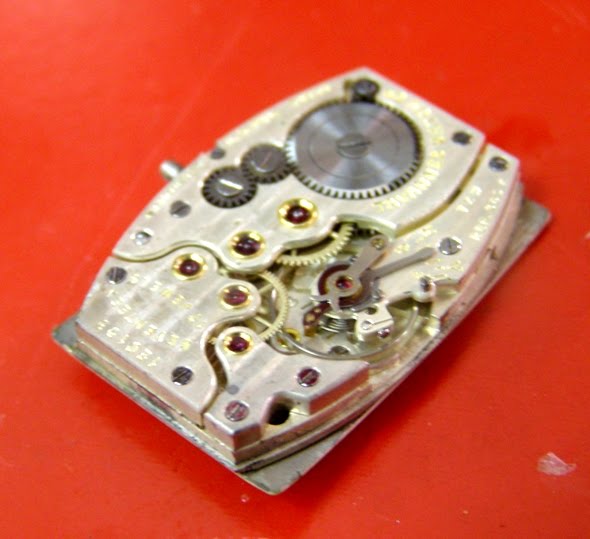
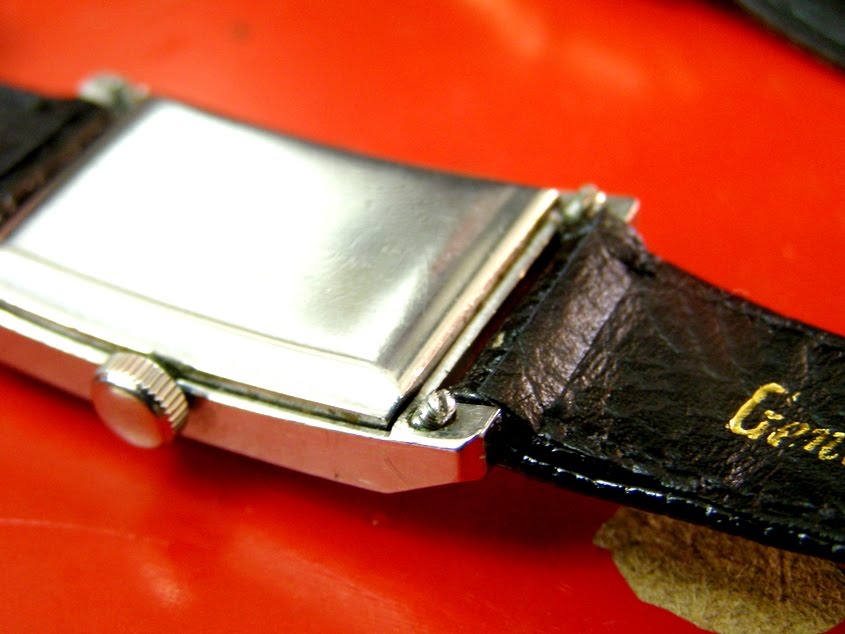
Gruen GULDITE Precision Autowind 35x38mm, manual winding 17 Jewel Cal. 516SS- RM950
 Gruen PRECISION AUTOWIND 38x42mm, manual winding 25 Jewel Cal. 03- RM600
 Gruen Precision Veri-thin Auto Bumper Sub Second 36x41mm, 17 Jewel Cal. 460- Auto not functioning -manually wind - Personal collection

 Gruen PRECISION AUTOWIND 34x39mm, manual winding 25 Jewel Cal.551- RM800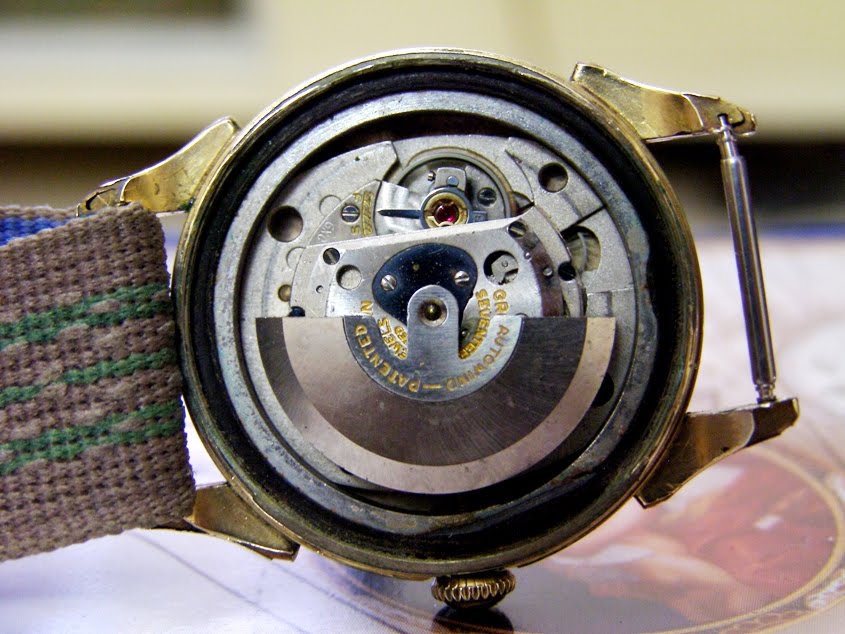


 Gruen PRECISION AUTOWIND DAYDATE 68x42mm, 17 Jewel Cal.33 - RM850


 Gruen PRECISION AUTOWIND 36x42mm, 17 Jewel Cal.550SS - RM950


BRIEF HISTORY OF GRUEN WATCHES
The first Gruen watches are of very high quality and are beautifully made. Both 18 and 16 size versions were manufactured, each in both open face and hunter styles, and in 18- and 21-jewel versions. The earliest D. Gruen & Son serial numbers started around 62000. The Gruens dealt directly with individual jewelry stores; there were no wholesalers or jobbers involved in the distribution of their watches. 
In 1898 George Gruen joined the firm as treasurer and financial officer. The company incorporated and its name changed to D. Gruen, Sons & Company.
In 1903 Gruen introduces its "VeriThin" line of watches.
In 1908 Gruen introduced both men's and women's wristwatches. These proved popular only with women. Gruen was one of a very few companies to take wristwatches seriously this early, seeing their potential in spite of disappointing early sales to male customers.
Gruen made both wrist and pocket watches for the military during World War I. Most had silver cases, which would tarnish but would not corrode under adverse conditions. To satisfy U.S. military regulations, these watches all have luminous dial markings and hands.
1911 Dietrich Gruen dies suddenly. Fred Gruen takes control of the company.
In 1913 the company purchased Nanny Goat Hill, a pasture just outside of Cincinnati, and renamed it Time Hill. Work began on a new building designed by architect Guy C. Burroughs at a construction cost estimated at $50,000 USD. The company moved to the new location in 1917.
1921: Gruen introduces The Cartouche wrist watch calling it "The logical wrist watch shape".
1922: Gruen introduces "The Pentagon" pocket watch. "the Croix de Guerre of American achievement"
Up until 1922 there had actually been three Gruen companies: D. Gruen, Sons & Company; The Gruen National Watch Case Company of Cincinnati; and The Gruen Watch Manufacturing Company of Biel, Switzerland. In 1922 all three businesses were merged to form the Gruen Watch Company, with Fred as President.
In 1924, Gruen released a special pocket watch in an edition of 600 to commemorate their 50th anniversary. The watch cost $500 at the time.
In 1925, Gruen introduced the men's Quadron. These were rectangular watches containing very high-quality 15-j or 17-j tonneau-shaped movements.
In 1928 Gruen releases The Techni-Quadron. The famous Techni-Quadron "doctor's watches" are so-called because the large seconds dial was handy for timing a patient's pulse.
In 1935 Fred Gruen, now 63 years old, became Chairman of the Board and Benjamin S. Katz was brought in as President of the Gruen Watch Company. In 1935, Gruen was about $1.8 million USD (roughly $36 million USD today) in debt; nervous stockholders and investors were behind the change. Fred would retire in 1940, but continued to sit on the board for the rest of his life.
In 1935 Gruen introduces the most famous Gruen wristwatch- "The Curvex". These watches are one of the greatest examples of 1930s streamlined design.
1937: Gruen introduces "The Ristside" or "driver's" watches.
In 1938, continuing the success of their VeriThin pocket watches, Gruen also launched a series of Veri-Thin wristwatches. Contemporary Curvex and Veri-Thin movements often are closely related, and can share many parts. By the 1940s, most Gruen wristwatches were either Veri-Thin or Curvex models.
Although Gruen did not manufacture watches for the U.S. military, they offered the public a collection of eight military-style watches, to be used as personal watches.
In 1949, the company introduced their first watches made entirely in the U.S., a line of 21-jewel men's models called the "Gruen 21". The movements are marked "Cincinnati" or "US" instead of the usual "Switzerland."
Fred Gruen retired in 1940 and died in 1945, and his brother George died in 1952. In 1953 the Gruen family sold their interest in the company. The same year, Gruen president Benjamin Katz was forced into retirement after a scandal, and in 1954 the company bought out his shares for $2 million USD.
In 1953, the Gruen Watch Company had its highest sales in its entire history.
The Myth about Gruen, Rolex and Aegler - The True History
One of the most deeply-held myths about Gruen is that Gruen and Rolex at one time manufactured movements for each other's watches. Both firms did use some of the same movements—the best known examples are the Gruen Techi-Quadron and its twin, the Rolex Prince. In reality, these movements were manufactured by a third company, Aegler, who was a very close neighbor to the Gruen Precision Factory.
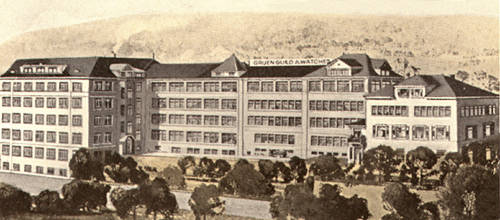
Above: The Aegler factory in Biel. Aegler made movements for Rolex (which had no manufacturing capability at the time), and this building is the main Rolex factory today. Aegler was partly owned by Gruen.
This article taken from Complete Price Guide to Watches, American Wriswatches, Rolex Wristwatches: Best of Time and Gruen Master Book